Battery vs. Gas: The Pros and Cons of Modern String Trimmers
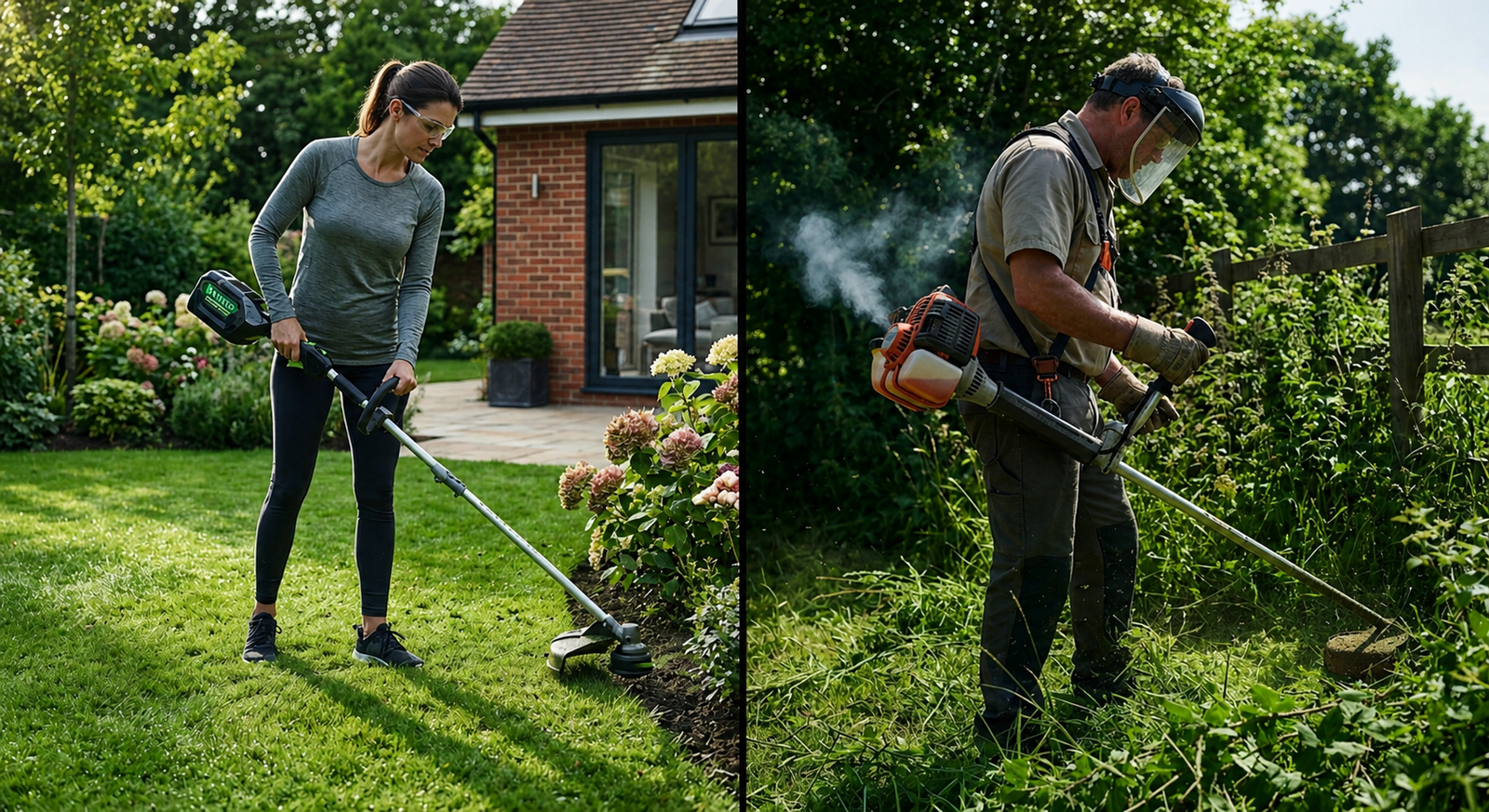
The landscape of lawn maintenance has undergone a seismic shift over the last decade. For years, the gasoline-powered string trimmer (or “weed whacker”) was the undisputed king of the yard—a noisy, powerful essential for anyone serious about a manicured edge. However, advancements in lithium-ion technology have propelled battery-powered alternatives from underpowered novelties to legitimate contenders.
For the homeowner or landscaping professional, the choice is no longer just about brand, but about the very energy source that drives the tool. This article breaks down the pros and cons of modern battery and gas string trimmers to help you decide which belongs in your tool shed.
The Gas-Powered Stalwart: Performance and Endurance
Gas trimmers are typically powered by two-cycle (2-stroke) or four-cycle (4-stroke) engines. They have long been the industry standard for high-torque applications and large properties.
The Pros of Gas
-
Unlimited Runtime: As long as you have a jerrycan of fuel, you can work. This makes gas the go-to for professional crews and properties larger than an acre.
-
Raw Power: Gas engines generally offer higher consistent torque, making them superior for “knocking down” thick, woody weeds or overgrown tall grass that might bog down a lower-voltage battery motor.
-
Durability and Repairability: Gas engines are mechanical. With basic knowledge, many parts (spark plugs, air filters, carburetors) can be serviced or replaced, often extending the tool’s life for decades.
The Cons of Gas
-
Maintenance Requirements: Gas trimmers require fuel mixing (for 2-strokes), oil changes (for 4-strokes), and winterization. Neglecting the fuel system can lead to gummed-up carburetors due to ethanol degradation.
-
Weight and Vibration: The internal combustion engine is heavy and creates significant vibration, which can lead to operator fatigue during long sessions.
-
Noise and Emissions: Gas trimmers are loud, often requiring hearing protection, and they emit exhaust fumes that are unpleasant for the user and the environment.
The Battery-Powered Revolution: Convenience and Quiet
Modern battery trimmers typically utilize 40V, 56V, or even 80V lithium-ion systems. Brands like EGO, Milwaukee, and Makita have bridged the gap, offering performance that rivals many consumer-grade gas models.
The Pros of Battery
-
Instant Start: There is no pull-cord struggle. You simply slide in the battery and pull the trigger. This “grab-and-go” nature is a massive benefit for quick touch-ups.
-
Quiet Operation: Battery motors are significantly quieter than gas engines. This allows for early morning or late evening gardening without disturbing neighbors.
-
Zero Emissions and Low Maintenance: There is no exhaust, no fuel mixing, and no oil. The only real maintenance involves keeping the tool clean and the string spool filled.
-
Reduced Vibration: The absence of a combustion engine means less physical strain on the hands and arms, making it an excellent choice for users concerned with ergonomic comfort.
The Cons of Battery
-
Finite Runtime: When the battery dies, work stops unless you have a spare. While modern batteries can last 30–60 minutes, charging can take an hour or more.
-
Battery Lifespan and Cost: Lithium-ion batteries have a finite number of charge cycles. Replacing a high-capacity battery can often cost as much as a new gas trimmer.
-
Potential Power “Fade”: Some lower-end battery models may lose power as the charge depletes, though “constant power” technology in premium brands has largely addressed this.
Head-to-Head Comparison: The Decision Matrix
| Feature | Gas-Powered Trimmers | Battery-Powered Trimmers |
| Best For | Large properties, thick brush | Suburban yards, quick maintenance |
| Starting | Pull-cord (can be difficult) | Push-button (instant) |
| Noise Level | High (95-105 dB) | Low (75-85 dB) |
| Maintenance | High (Filters, Plugs, Fuel) | Very Low (Cleaning only) |
| Initial Cost | Moderate | High (including battery/charger) |
Factoring in the Ecosystem
One of the most significant considerations when choosing a battery trimmer is the battery platform. Most manufacturers use interchangeable batteries across their entire tool line. If you already own a leaf blower or lawn mower from a specific brand, staying within that ecosystem saves significant money, as you can buy “tool-only” versions of the string trimmer.
Environmental and Neighborhood Impact
In many urban and suburban areas, noise ordinances and environmental concerns are shifting the needle toward electric. Some municipalities have even begun discussing bans on gas-powered landscaping equipment due to their high localized emissions. Switching to battery is not just a choice of convenience; it is increasingly a choice of social and environmental responsibility.
Conclusion: Which Should You Choose?
The “best” string trimmer depends entirely on your context.
If you live in a United States with a standard-sized yard and value quiet, hassle-free maintenance, a battery-powered trimmer is almost certainly the better choice. The instant start and low noise outweigh the need for the raw, all-day power of gas.
However, if you are a professional landscaper or own a vast property with heavy, dense brush far from a power outlet, the gas trimmer remains the most reliable tool for the job.
Regardless of your choice, investing in a high-quality model from a reputable brand ensures that your “total garden gear” remains an asset rather than a frustration.