Hori Hori Knives: Why This Japanese Tool Is a Game Changer
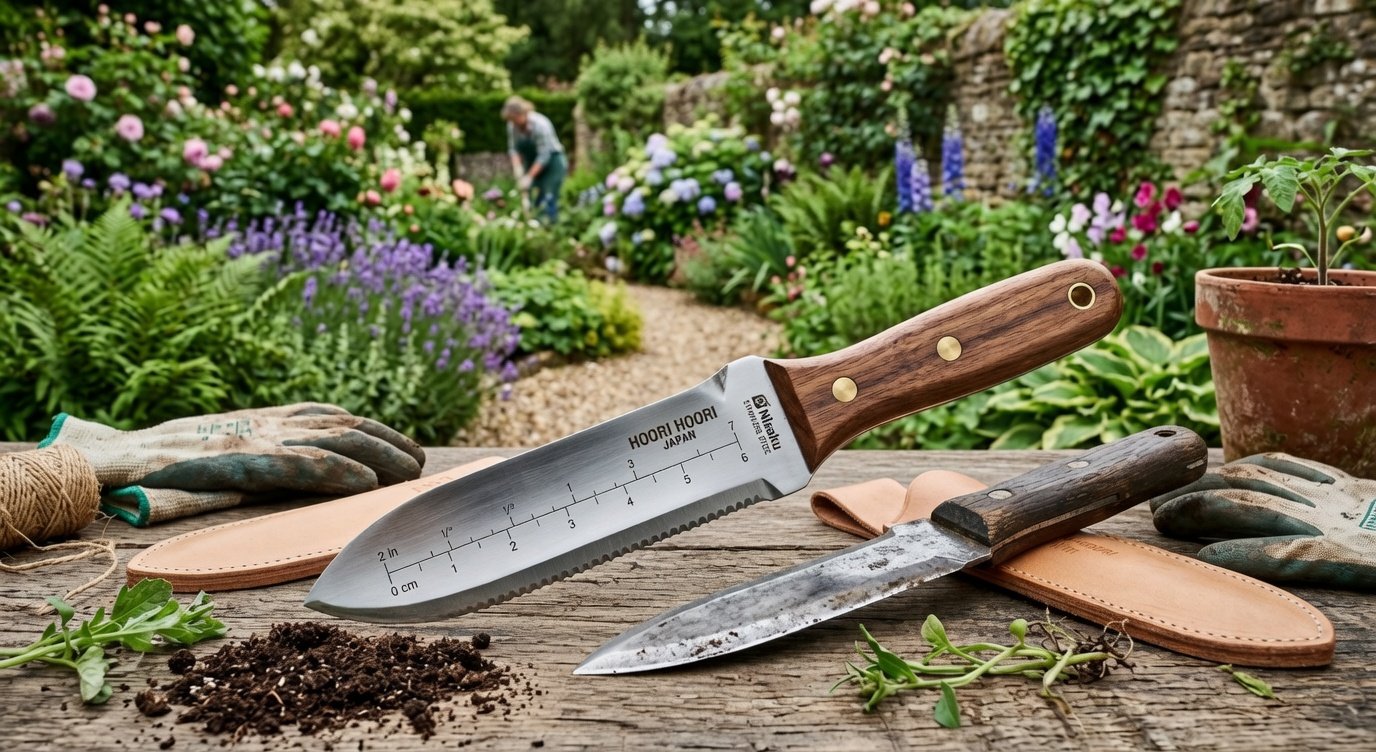
In the world of gardening, many tools claim to be “all-in-one” solutions, but few live up to the promise as authentically as the Hori Hori knife. Originating from Japan, the name “Hori” (ホリ) translates literally to “to dig.” For centuries, this tool was a staple for Japanese mountain foragers harvesting Sansai (wild vegetables), but today it has become the “secret weapon” of professional horticulturists and home gardeners alike.
If you are looking to streamline your gardening kit, the Hori Hori isn’t just an addition—it’s a replacement for half a dozen other implements. Here is why this Japanese masterpiece is a genuine game changer for your gardening routine.
The Anatomy of a Hybrid
The Hori Hori is best described as a cross between a serrated knife and a hand trowel. It typically features a heavy-duty stainless or carbon steel blade with a slight concave curve. Unlike a standard kitchen knife, it is double-edged: one side is razor-sharp and smooth, while the other is deeply serrated.
Most authentic Hori Horis also feature depth measurements (inches or centimeters) etched directly into the metal. This design allows it to function as a ruler, a saw, a trowel, and a weeding tool simultaneously.
1. The Ultimate Weeding Machine
Most hand weeders struggle with deep taproots or compacted soil. The Hori Hori excels here because of its structural integrity. Its narrow, pointed tip allows you to plunge deep into the earth next to a dandelion or thistle. With a quick twist of the wrist, the serrated edge severs side roots while the concave blade pries the main root out whole. Unlike thin, stamped-metal trowels that bend under pressure, a high-quality Hori Hori is designed to withstand significant leverage.
2. Precision Planting and Bulb Depth
Success with bulbs and seedlings often depends on precise depth. Planting a bulb too shallow can lead to frost damage, while planting too deep can prevent germination. The integrated ruler on the Hori Hori blade eliminates the guesswork. As you dig your hole, you can see exactly how many inches deep you are in real-time.
Furthermore, the sharp point is perfect for “dibbing”—creating small, precise holes for seeds or delicate plugs without disturbing the surrounding soil structure.
3. A Multi-Surface Saw
The serrated edge of a Hori Hori is surprisingly capable. While you wouldn’t use it to fell a tree, it is the perfect tool for:
-
Dividing Perennials: Use the serrated edge to saw through the tough, matted root balls of Hostas or Daylilies.
-
Opening Bags: It slices through thick plastic bags of mulch or soil like butter.
-
Pruning Small Suckers: It can quickly clear away thin, woody growth at the base of a shrub that might be too awkward for bypass pruners to reach.
4. Sod Cutting and Edging
Maintaining a clean edge between your lawn and your garden beds is a constant battle. The sharp, straight edge of the Hori Hori allows you to “trace” the perimeter of your bed, cutting through grass runners and sod with surgical precision. Because the blade is relatively short, it provides a level of control that long-handled edgers lack, making it ideal for curved beds and intricate landscaping.
Choosing the Right Hori Hori
Not all Japanese garden knives are created equal. When shopping for this game-changing tool, look for these three markers of quality:
-
Full-Tang Construction: Ensure the metal blade extends all the way through the handle. This is critical for leverage; “half-tang” tools are prone to snapping at the handle joint.
-
Stainless vs. Carbon Steel: Stainless steel is low-maintenance and rust-resistant, making it great for most gardeners. Carbon steel holds a sharper edge for longer but requires regular oiling to prevent oxidation.
-
The Sheath: A Hori Hori is essentially a weapon-grade gardening tool. A durable leather or heavy-duty nylon sheath is essential for safety and for keeping the tool accessible on your belt.
Maintenance: Keeping the Edge
To keep your Hori Hori a game changer for years to come, it requires minimal but consistent care. Because it spends much of its life in the dirt, the blade will eventually dull.
-
Clean: Wipe away soil and sap after every use.
-
Sharpen: Use a medium-grit whetstone or a diamond file on the smooth edge. For the serrations, use a specialized tapered file.
-
Oil: If your knife has a wooden handle, occasionally rub it with linseed oil. Wipe the blade with a thin coat of mineral oil to prevent rust, especially if you live in a humid climate like Penang.
Conclusion
The Hori Hori knife represents a philosophy of efficiency. It honors the idea that a single, well-made tool is worth more than a shed full of plastic alternatives. By combining digging, cutting, measuring, and prying into one ergonomic package, it allows the gardener to stay in the “flow” of their work without constantly reaching for a different implement.
Whether you are a beginner or a seasoned pro, the Hori Hori is the one tool that will likely never leave your side once you’ve experienced its versatility. It is, quite literally, the “sharpest” investment you can make for your garden.