Glass Globes vs. Ceramic Spikes: The Best Self-Watering Gadgets
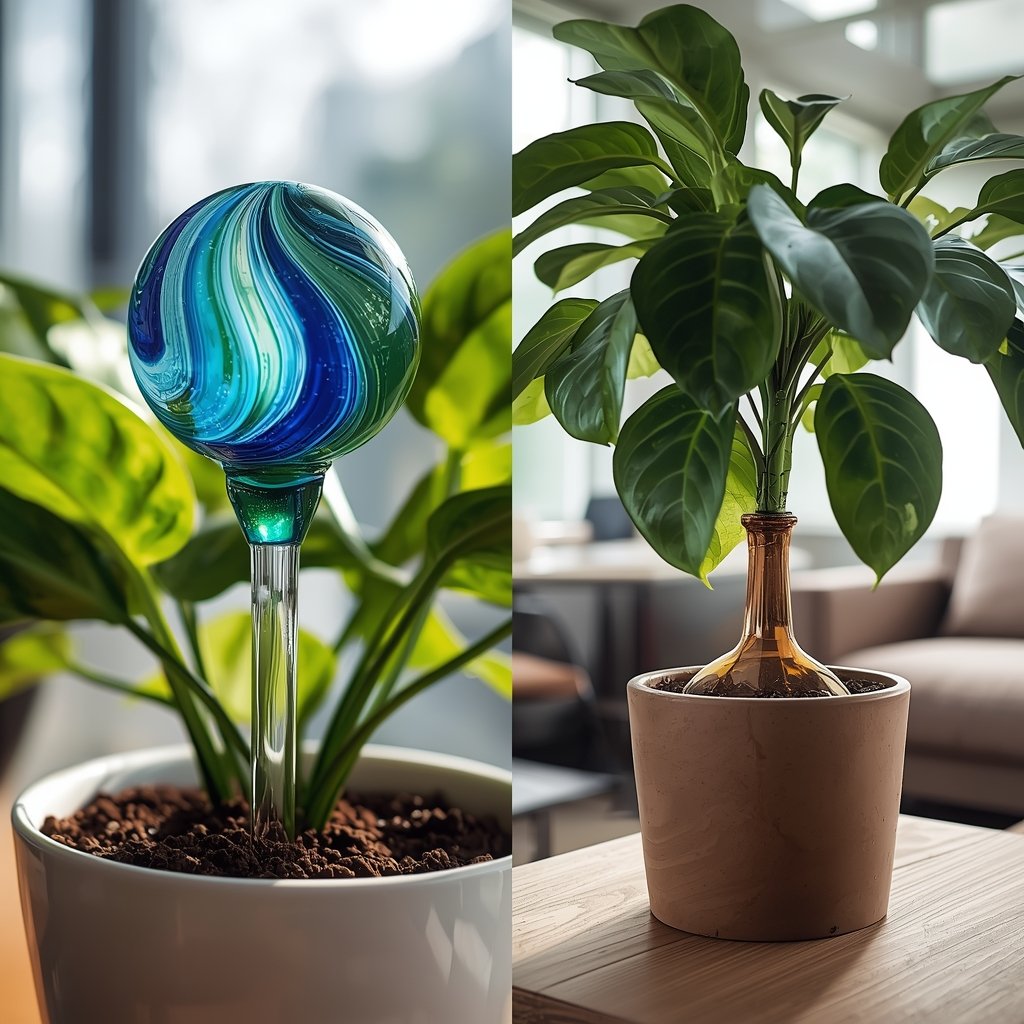
Maintaining the delicate balance of soil moisture is often the most challenging part of plant care. For busy homeowners, frequent travelers, or those managing a growing collection of indoor and outdoor greenery, self-watering gadgets offer a practical solution to “water stress.” Two of the most popular decorative and functional tools on the market are Glass Watering Globes and Ceramic Watering Spikes.
While both operate on simple physical principles to deliver water to the root zone, they serve different aesthetic and botanical purposes. Choosing the right one can mean the difference between a thriving garden and a waterlogged mess. This guide breaks down the mechanics, pros, and cons of each to help you select the best “total garden gear” for your home.
Glass Watering Globes: The Aesthetic Choice
Glass globes, often called “aqua globes,” are hand-blown glass bulbs with a long, thin neck. They are as much a decorative accent as they are a functional tool.
How They Work
The science behind glass globes is based on air displacement. You fill the globe with water and insert the stem into the soil. As the soil dries out, air enters the globe, displacing a small amount of water into the soil. Once the soil is moist enough to seal the stem again, the water flow stops.
The Advantages
-
Visual Appeal: Available in a variety of colors and patterns, these globes add a touch of artistry to indoor potted plants.
-
Simplicity: There are no moving parts or complex setups. You simply fill, flip, and insert.
-
Immediate Feedback: Because the globes are transparent, you can see exactly how much water is left at a glance.
The Trade-offs
-
Clogging Issues: The narrow glass stems are notorious for getting clogged with bits of soil during insertion.
-
Fragility: Being made of thin glass, they are prone to breaking if dropped or if the soil is too compacted.
-
Limited Capacity: Most globes hold a small volume of water, making them suitable only for small to medium-sized indoor plants.
Ceramic Watering Spikes: The Functional Powerhouse
Ceramic spikes—often made of terracotta—are porous cones that sit in the soil and connect to an external water reservoir, such as a recycled wine bottle or a dedicated plastic tank.
How They Work
Ceramic spikes operate via osmotic pressure and capillary action. The porous nature of the terracotta allows water to slowly seep through the walls of the spike directly into the surrounding soil. Because the water moves through the ceramic itself, the system provides a very slow, consistent release of moisture.
The Advantages
-
Sustainability: Many spikes are designed to fit standard long-neck glass bottles, allowing you to upcycle old wine or soda bottles into irrigation reservoirs.
-
Deep Root Targeting: The length of the spike ensures that moisture reaches the root zone rather than just sitting on the surface of the soil.
-
Higher Capacity: Since you can attach a large bottle (up to 1.5 liters), these spikes can keep plants hydrated for much longer periods—often up to two weeks.
The Trade-offs
-
Utility Over Beauty: While functional, a wine bottle stuck upside down in a planter may not fit every interior design aesthetic.
-
Pre-Soaking Required: For the best results, terracotta spikes must be soaked in water for several hours before their first use to prime the pores.
Head-to-Head: Which Should You Choose?
| Feature | Glass Watering Globes | Ceramic Watering Spikes |
| Best For | Small indoor plants & decor | Larger plants & vacation watering |
| Duration | 1–4 days | 7–14 days (with large bottle) |
| Durability | Fragile (Glass) | Sturdy but breakable (Terracotta) |
| Maintenance | High (frequent refilling) | Low (infrequent refilling) |
| Setup | Instant | Requires pre-soaking |
Tactical Tips for Best Results
Regardless of the gadget you choose, success depends on proper installation. In humid environments like Jelutong, Penang, it is vital to monitor for mold or algae growth in the water reservoirs.
-
Wet the Soil First: Never insert a self-watering tool into bone-dry soil. Water the plant normally first so the gadget only has to maintain moisture rather than establish it.
-
Clear the Clogs: If using glass globes, use a pencil to create a pilot hole in the soil before inserting the stem. This prevents soil from packing into the narrow opening.
-
Check the Seal: For ceramic spikes, ensure the bottle sits securely in the spike. An air-tight seal is necessary to control the rate of the drip.
Conclusion
Glass globes are the perfect marriage of form and function for the casual plant parent who wants to add a pop of color to their bookshelf. However, for serious hydration—especially when you’re away on a trip—Ceramic Watering Spikes are the superior choice for reliability and capacity. By integrating these tools into your gardening routine, you ensure your plants receive the consistent hydration they need to thrive.